Europe’s Ambitious Attempt to Build a Reusable Spacecraft Platform
Space exploration has been one of humanity's most technologically advanced achievements. However, only a few countries worldwide, such as the US, Russia, China, and India, have developed space exploration vehicles from the ground up.
Space exploration has been one of humanity's most technologically advanced achievements. However, only a few countries worldwide, such as the US, Russia, China, and India, have developed space exploration vehicles from the ground up. This has often put Europe in a difficult position, requiring it to leverage US expertise to pursue space exploration. That, however, is changing now.
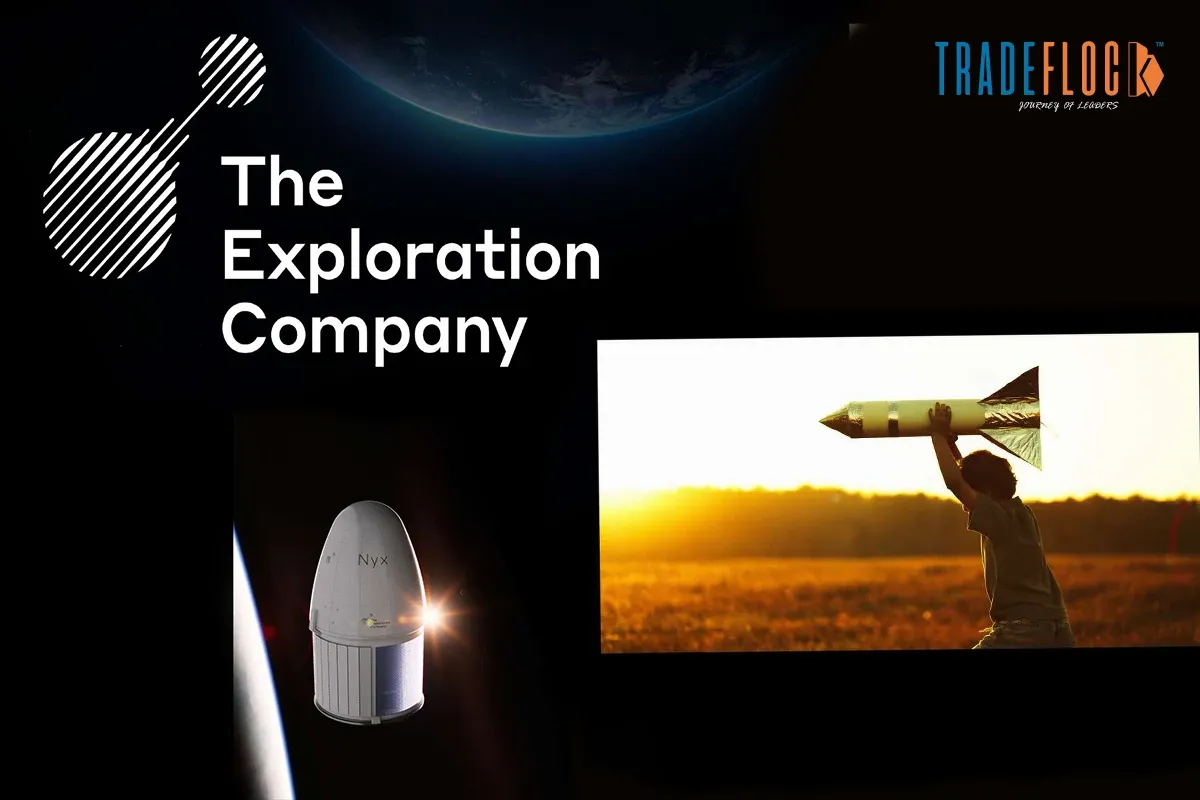
The Exploration Company (TEC) stands out as one of the most ambitious European aerospace startups of the 2020s, aiming to break longstanding dependencies on U.S.-dominated space logistics systems. Founded in 2021, TEC is focused on developing Nyx, a family of modular, reusable spacecraft designed to carry cargo, eventually humans, to low Earth orbits, lunar orbit, and beyond. The company’s rapid progress, multinational presence, and a healthy funding ecosystem are changing perceptions of space exploration and shifting the torch to private firms rather than government institutions.
Founding and Early Mission
The Exploration Company was established in 2021 by Hélène Huby, an aerospace engineer and former Airbus manager, along with a team of experienced aerospace engineers who have had ample experience in space exploration due to the part they played in programs like Orion-ESM, Ariane, and the Automated Transfer Vehicle (ATV). The company was founded with dual headquarters in Munich, Germany, and Mérignac (Bordeaux), France, reflecting its Franco-German roots and a pan-European presence. More offices were subsequently opened in Italy, the USA, and the MENA region.
The mission was clear from the outset: develop a reusable, in-orbit, refillable spacecraft that could be launched on any heavy-lift rocket and serve multiple destinations and operators, making space logistics more affordable and accessible than traditional expendable vehicles.
Product Vision: Nyx and Modular Spacecrafts
TEC’s core product is Nyx, a modular, reusable spacecraft designed to support future missions to the Space Station and lunar orbit. The best thing about Nyx is its modular ability. This means that, in addition to being a reusable rocket system, TEC can modify it to meet the client's needs. Whether it's a fleet of small satellites, a fleet of large satellites, or a mix of both, Nyx can place them in their designated orbits around Earth. Based on the mission, clients can pick and choose from a host of different Nyx systems like:
Nyx Earth: Tailored for low Earth orbit operations, capable of transporting cargo to space stations and returning up to 3,000 kg to Earth, currently one of the highest down-mass capacities planned for a reusable spacecraft.
Nyx Cislunar: Designed for missions between Earth and lunar orbit, projected to deliver up to 5,000 kg to lunar orbit and return 2,000 kg to Earth.
Nyx Moon: A simplified lunar lander variant intended for cargo delivery to the Moon’s surface, equipped with advanced thrusters for surface mobility.
This allows TEC to remain versatile while keeping efficiency at their core.
Major Contracts, Funding, and Growth
TEC's journey has included significant financial milestones. In February 2023, the company raised $46.8 million in Series A funding to accelerate development of its Nyx platform. This was, at the time, the largest space-sector funding round in Europe. More than a year later, in November 2024, TEC secured a $160 million Series B funding round. This influx of capital provided an opportunity to support engineering, production, and pre-booked mission contacts.
In addition to private funding, TEC secured key contracts and collaborations with major partners. In May 2023, the company won an ESA contract valued at $29.2 million to study reusable cargo solutions for the International Space Station (ISS), reflecting growing institutional support for commercial LEO logistics. TEC has also signed pre-booked cargo missions with commercial space station developers, including Axiom Space, Starlab Space, and others, contributing to a backlog of approximately $750 million by late 2024.
Prototype Demonstrators and Test Missions
TEC’s development included rapid prototypes like Mission Bikini and Mission Possible to validate reentry and orbital functions before Nyx’s launch. The original plan was a demonstrator launch on Ariane 6’s first flight in 2024, but delays moved testing to a SpaceX Falcon 9 in 2025.
The Mission Possible flight on June 23, 2025, carried cremated remains of 166 individuals and cannabis seeds into orbit for a memorial service and scientific projects. The capsule completed at least two orbits but was lost during reentry due to a parachute anomaly, highlighting the risks and lessons of early spaceflight.
Paving the Way for Private Firms in Space Exploration!
The Exploration Company has become a leading European firm in space logistics, challenging the dominance of traditional space agencies and U.S.-led private firms. Backed by strong capital and institutional contracts, TEC is developing the Nyx spacecraft to promote modular, sustainable space services across Europe. Despite ongoing challenges, its progress highlights Europe's expanding role in the evolving space industry.
Share this article
Latest News
Categories
More News