The Birth of the AI-Designed Virus: A New Frontier in Synthetic Biology
The first known attempt at designing a viral genome using artificial intelligence emerged in a September 2025 study by an international team led by Stanford University and the Arc Institute, reporting the creation of the first fully artificial, AI-designed viral genome. The publication of this project in peer-reviewed
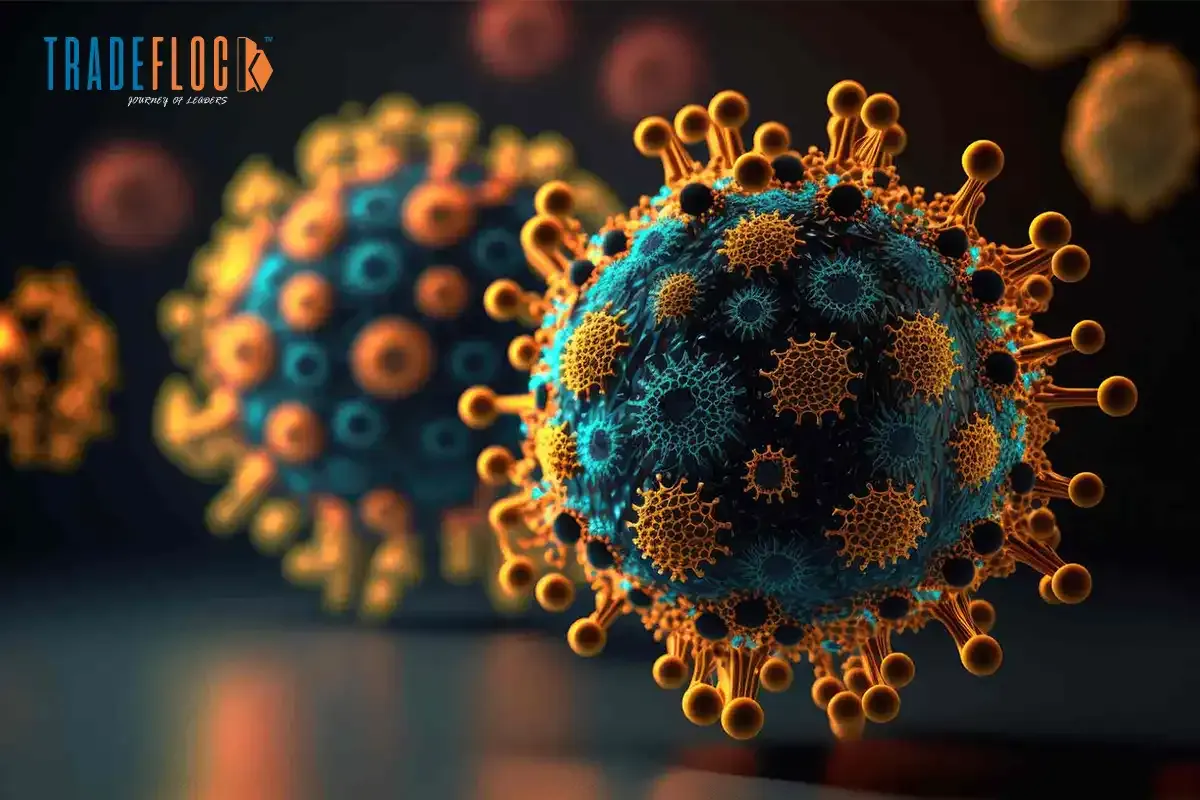
The first known attempt at designing a viral genome using artificial intelligence emerged in a September 2025 study by an international team led by Stanford University and the Arc Institute, reporting the creation of the first fully artificial, AI-designed viral genome. The publication of this project in peer-reviewed form and its widespread coverage mark a significant breakthrough in synthesising the dissolution of the boundary between digital intelligence and biological life. A scientist states that AI is redefining what it means to be human and to be alive.
From Code to Cell: How Machines Learned to Design Life
The core of this discovery is a new AI system, named Evo, which Stanford and the Arc Institute trained on millions of viral genomes. The model learned the language of viral genetics, including gene arrangement, regulatory logic, and host-interaction patterns, then generated entirely new viral genomes from scratch. One researcher explained: "Genome design involves the coordination of several interacting genes and regulatory factors, which adds complexity, and there are new constraints and failure modes that would not be present in simply designing a single protein."
As a test case, the team selected the bacteriophage PhiX174, a small virus that infects the bacterium E. coli. Out of hundreds of genomes created by the AI, 16 were confirmed to be functional in laboratory tests, and each included dozens to hundreds of mutations that had never been observed in nature. The AI-designed phages were found to be more effective than their natural counterparts, with some showing faster bacterial infection and increased efficiency in the lab.
Engineering Evolution: Why AI Is the New Biologist
It is not merely a technical achievement but a shift in paradigm. Unlike in the past, when researchers focused on sequencing genomes or modifying existing ones, this project shows that AI can design biological life. The models can create a single gene, whole pathways, and in this case, the entire genome of a very simple bacteriophage, said one of the lead researchers.
We are no longer just supplementing human research with machine assistance; AI has broken through the barrier into generative production. Put simply, the machine will become a co-author of biological life. This opens up new possibilities: synthetic viruses that can deliver therapies, targeted phage therapy against antibiotic-resistant bacteria, or even programmed organisms designed to address climate change.
Balancing Innovation and Risk in the Age of Living Algorithms
With Great power comes great responsibility. Biosecurity concerns arose from this innovation's dual-use nature. An expert said, "If someone discovers a new DNA sequence creating a virus killing E. coli, I’d be impressed. But what about applying this to non-benign bacteria-targeting phages?" The team took safeguards: the viruses used did not cause human diseases and only attacked harmless E. coli, under strict biosafety measures. Ethicists warn that we're entering uncharted waters; one described it as a significant yet unsettling development. A preprint of 130 experts revealed that 76% were concerned about AI misuse in biology, and 74% sought new governance measures.
A Catalyst for Medicine, Climate and Beyond
Nevertheless, the possibilities are vast, despite the warnings. In healthcare, it can accelerate vaccine development by modelling viral evolution and predicting therapeutic responses. Engineered viral vectors can be utilised to enhance agricultural practices by enhancing crop resilience or improving soil-microbiome health. Synthetic phages could prove useful in environmental science for breaking down persistent pollutants or restoring ecosystems damaged by industrialisation. Industry reports suggest that AI-driven synthetic biology could become a multi-billion-dollar industry, valued at over $120 billion by the end of the decade.
As a technology commentator stated, it is the first time that AI has moved beyond reading DNA sequencing and writing its synthesis to designing it.
The Future of Creation: Redefining What It Means to Be Alive
In addition to the practical applications, this work prompts a largely philosophical reconsideration. When a machine can design, simulate, and create a functioning organism, is that organism equivalent to one that has evolved through natural selection? Is this the era of Darwin 2.0, as one scientist has called it?
What we are capable of doing is not the only challenge humanity faces; we also have to consider what we ought to do. Authorship, responsibility, and ethics are central questions concerning the emergence of algorithm-designed life. Who bears responsibility for a system that AI has designed and that continues to behave unpredictably?
A Turning Point in Human History
The design of the first functioning AI-designed viral genome on Earth is not just a scientific breakthrough but a paradigm shift at the boundary between biology and artificial intelligence. It heralds a future where algorithms can imagine, create, and implement living systems.
The outcome of this moment will be either a new era of medical miracles, environmental restoration, or something more sinister, depending on the governance, ethics, and foresight we apply in the lab and boardroom. Ultimately, the virus that is coded might not only be reinventing biology as we know it but also redefining what it means to be a creator of life itself.
Share this article Latest News Categories More News