Albertsons Earnings: Merger Fight Costs Doubled to $76.9M
Albertsons' merger-related costs doubled to $76.9M in 28 weeks while identical sales fell 0.8% and operating income fell 41%, its filing shows.
Finance Reporter
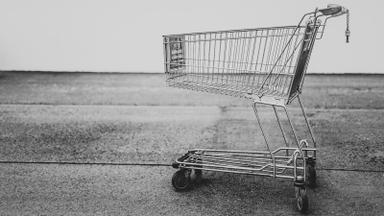
A gray metal shopping cart and its shadow on an empty parking lot with white painted lines. Photo: David Clarke on Unsplash.
Albertsons' legal fight with Kroger is getting more expensive just as its stores are selling less. Merger-related costs, which the company says primarily include litigation costs related to the terminated merger, doubled to $76.9 million in the first 28 weeks of fiscal 2026 from $38.0 million a year earlier, when the figure also included retention program expense. In the second quarter, identical sales fell 0.8% and operating income fell 41%. The trial over the failed merger is set to start Monday, Oct. 19.
What the Filing Shows About the Merger Costs
Albertsons' second-quarter earnings release, filed Oct. 13, lists merger-related costs of $35.3 million for the 12 weeks ended Sept. 12, up from $19.0 million. By our calculation that is about 20% of the quarter's $174.5 million in operating income. The release says selling and administrative expenses were relatively flat as productivity savings offset inflation and "increases in merger-related litigation costs." Its footnote says the year-earlier figures also included retention program expense, so the rise in litigation costs alone is likely larger than the headline doubling.
Over the past four quarters, merger-related costs totaled $123.0 million, below $133.1 million a year earlier, likely because the earlier period included advisor fees from before the merger ended in December 2024, which the release says the measure covers. The rolling four-quarter total is still below a year earlier.
What Albertsons Is Asking For
Albertsons is seeking about $8 billion from Kroger, with a total range of $7.5 billion to $9.3 billion, Grocery Dive reported from a pretrial brief. The pieces are a lost merger premium of $5.43 billion to $6.88 billion, a tax gross-up of $1.4 billion to $1.7 billion, the $600 million termination fee and at least $75 million in interest, fees and costs. Kroger says Albertsons is not entitled to the fee or the damages. Albertsons says the lost premium is what its shareholders would have earned had the merger closed.
The Shopper Side of the Quarter
Identical sales, which exclude fuel and include digital orders, fell 0.8%, while digital sales rose 11% and pharmacy kept growing despite Inflation Reduction Act headwinds, according to the release. Those figures are not adjusted for prices. The Bureau of Labor Statistics said food at home prices were up 1.8% over the 12 months ended in September, so a 0.8% sales decline suggests fewer items or cheaper baskets. Drug price changes make the split hard to pin down.
Kroger, which has the same pharmacy headwind, did better. Its quarterly filing shows identical sales excluding fuel up 0.2% for the quarter ended Aug. 15, after a 138 basis point drag from the Inflation Reduction Act. The two quarters end four weeks apart, so the gap is a rough comparison, not a ranking.
Albertsons ended the quarter with 2,240 stores, down from 2,257 a year earlier, after opening seven and completing 38 remodels in 28 weeks. In the quarter it booked $42.4 million in net losses on property dispositions and impairments, driven mainly by retail store impairment losses and disposals of equipment. The company said it is reviewing its "portfolio of banners, markets, assets and businesses" and no longer gives a fiscal 2026 outlook. Executive Chair Meg Whitman said on the call that "everything should be on the table," and listed cutting costs and reducing prices among the tasks, Retail Brew reported.
Debt and Payouts
Total debt including finance leases was $9.33 billion, up from $8.13 billion a year earlier, and the net debt ratio rose to 2.42 from 2.02. Net interest expense was $125.0 million for the quarter, up from $105.3 million. In 28 weeks, Albertsons paid $166.6 million in dividends and $398.8 million for treasury stock purchases, according to its cash flow statement, or $565.4 million together. The release text puts shares repurchased at $387.6 million. Operating cash flow of $1.21 billion less $899.6 million of capital spending leaves about $311 million by our calculation, so payouts exceeded it. The company also issued a net $340 million of long-term debt, including its ABL facility.
Turnaround Plan Due With Fourth-Quarter Results
Albertsons promises a turnaround plan and new financial targets with its fourth-quarter results, plus an investor day in spring 2027. Kroger, which is cutting jobs itself, plans an investor update next week. TradeFlock estimated the cost of Kroger's 3,000 corporate job cuts earlier this month. Albertsons is the outlier on guidance this season: Best Buy raised its fiscal-year outlook after its second quarter and Lululemon lowered its outlook, while Albertsons withdrew its outlook entirely. Watch whether Albertsons spends savings on lower prices, and whether the banner review ends in store closures or sales.
Photo: Gray shopping cart by David Clarke on Unsplash, used under the Unsplash License.
Priya Nair
Finance Reporter
Writes on banks, private credit, and the regulatory perimeter around nonbank lenders.