Cosmos 2612 and ICEYE X36: Gap Widens After Oct. 18 Burn
CelesTrak's Oct. 19 elements put Cosmos 2612 about 290 km behind ICEYE-X36 and 2.5 km higher after a reported Oct. 18 maneuver, by TradeFlock's math.
Technology Editor
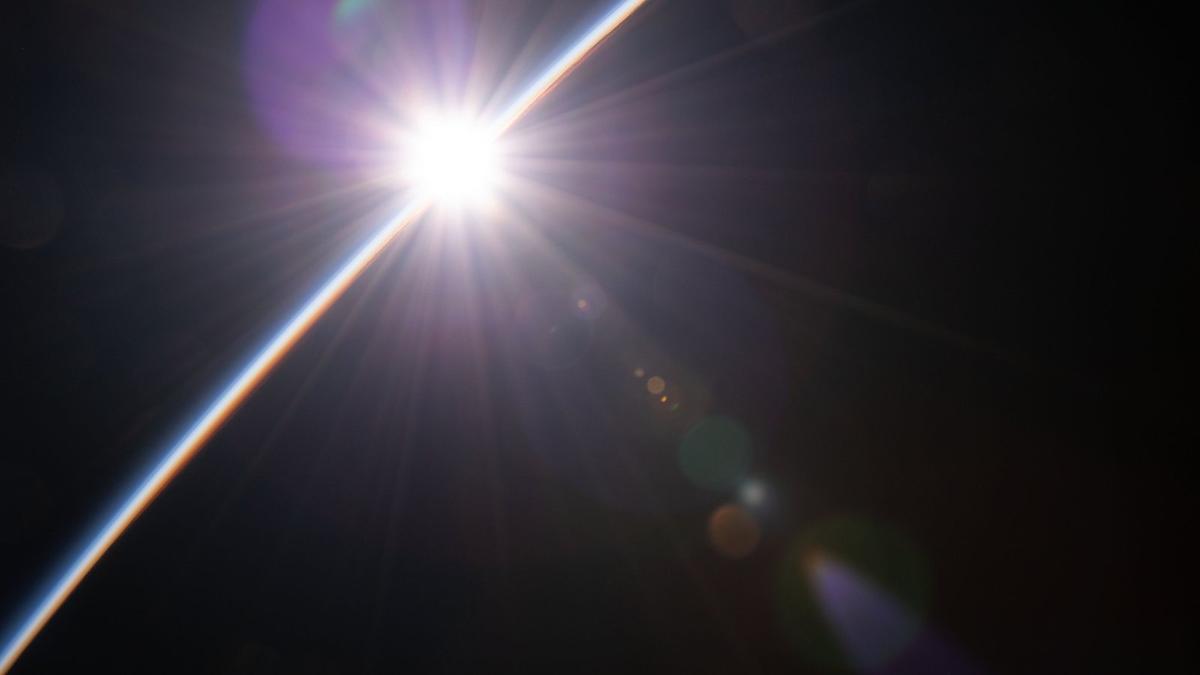
Photo: NASA / Wikimedia Commons, public domain
Russia's Cosmos 2612 is no longer flying alongside ICEYE-X36. The latest public orbital elements for the two satellites, published by CelesTrak with an epoch of 07:32 UTC on Monday, Oct. 19, put the Russian military satellite about 290 km behind the U.S.-registered radar satellite at that time and about 2.5 km higher, by TradeFlock's calculation. At that height difference the gap grows by roughly 355 km a day. The change follows what Dutch tracker Marco Langbroek reported as a Cosmos 2612 burn on Oct. 18. Over the weekend, trackers said the two were within a few kilometers of each other, and reports of a 26-meter pass at 16:07 UTC Monday relied on older data.
What the Oct. 19 Orbital Data Show
In the CelesTrak elements, ICEYE-X36 completes 15.0783 orbits a day and Cosmos 2612 completes 15.0701. Both orbits are inclined 97.854 degrees, with ascending nodes 0.0005 degrees apart, so the satellites still share a plane. Each element set is referenced to an equator crossing, and Cosmos 2612's came 38 seconds after ICEYE-X36's. At about 7.6 km per second, that is roughly 290 km along the track at the 07:32 UTC epoch, by TradeFlock's calculation.
The lower orbit rate corresponds to an orbit about 2.5 km higher, which moves Cosmos 2612 back by about 2.9 degrees, or 355 km, a day. Changing an orbit by that much takes roughly 1.4 meters per second of velocity change, a TradeFlock estimate. Orbital Radar notes that element sets carry "kilometre-scale uncertainty," so the figures are approximate, but a 290 km gap is far outside that range.
Langbroek wrote in an Oct. 19 update on his SatTrackCam Leiden blog that Cosmos 2612 made "another manoeuver" around 12:26 UTC on Oct. 18. He said it "could either be to bring the satellite further away from the target, or the first of a set of phasing manoeuvers for a future new approach." Running the newest elements backward with the standard SGP4 model, TradeFlock found the two orbits come within about 5 km of each other shortly before noon UTC on Oct. 18, consistent with a burn at about that time.
How the Approach Unfolded
Space tracking company LeoLabs said in a Friday statement reported by Axios that the Russian satellite's movement "appears to be a deliberate approach toward" ICEYE-X36. It added: "While the intent remains uncertain, the behavior warrants continued monitoring." Independent tracker Jonathan McDowell said on Oct. 17 that Cosmos 2612 was "stationkeeping within 5 km or less of ICEYE X36," AeroTime reported. Langbroek wrote on Oct. 18 that the closest approach came early that day, "possibly around 1:35 UTC, to within a few hundred meters or possibly (much) closer." He said he saw no sign in ICEYE-X36's elements that it had been hit.
The run-up took months. The Center for Strategic and International Studies said Russia launched Cosmos 2609 through Cosmos 2614 in April, that five of them raised their inclinations in May to match ICEYE-X36's orbital plane, and that Cosmos 2609 passed within 2.5 km on May 26. CSIS said Cosmos 2612 began a new series of maneuvers on Sept. 30. Integrity ISR estimated that the sequence from Sept. 30 to Oct. 12 cost about 57 meters per second of velocity change.
What Is at Stake for ICEYE
ICEYE is privately held, so its own releases are the main disclosures. In June it said it had raised €450 million in a primary Series F round led by General Atlantic at a valuation of over €10 billion. It has reported unaudited 2025 revenue of over €250 million, EBITDA of over €100 million and a contracted backlog of €1.5 billion. It says seven governments across Europe have procured sovereign satellite systems from it. In December 2025, its joint venture with Rheinmetall won a German armed forces contract that the companies valued at about €1.7 billion gross.
Ukraine is a long-standing customer. ICEYE said in 2022 that one of its satellites was designated for the Ukrainian government's use, and in January 2026 it signed an expanded agreement with a customer within Ukraine's Ministry of Defence. ICEYE has not said whether ICEYE-X36 serves Ukraine, and a Ukrainian official told Axios it was unclear whether it does.
Responses
ICEYE and the Defense Department declined to comment to Axios. TradeFlock found no public comment from Russia's Defense Ministry, Roscosmos or the Russian Embassy in the reports it reviewed. CSIS noted that Russia has said it might consider commercial satellites supporting Ukraine to be legitimate military targets. Russia's purpose for the approach has not been publicly established, and TradeFlock has not independently verified what others reported.
What to Watch Next
New element sets will show whether Cosmos 2612 burns again to start a new approach. Militarnyi reported a 26-meter pass at 16:07 UTC on Oct. 19, the time an Orbital Radar page dated Oct. 18 gave for its projected closest approach. Propagating the elements with the 07:32 UTC Oct. 19 epoch, the satellites would instead be about 410 km apart at that time and about 715 km apart at 12:00 UTC on Oct. 20 if neither maneuvers, by TradeFlock's calculation. For more on the business of orbit, see TradeFlock's coverage of space startup funding, Europe's Exploration Company and Google's chip in orbit.
Cover photo: Sunrise breaking over Earth's horizon, photographed from the International Space Station on Feb. 3, 2021. Photo: NASA / Wikimedia Commons, public domain (cropped).
James Whitaker
Technology Editor
Reports on semiconductors, cloud infrastructure, and the industrial politics of AI.