Microsoft Maia 300 AI Chip: What Multi-Gigawatt Means
Microsoft's 167-kilowatt, 96-chip Maia 300 rack implies about 575,000 accelerators per gigawatt, by TradeFlock's estimate, as Maia goes multi-gigawatt in 2027.
Technology Editor
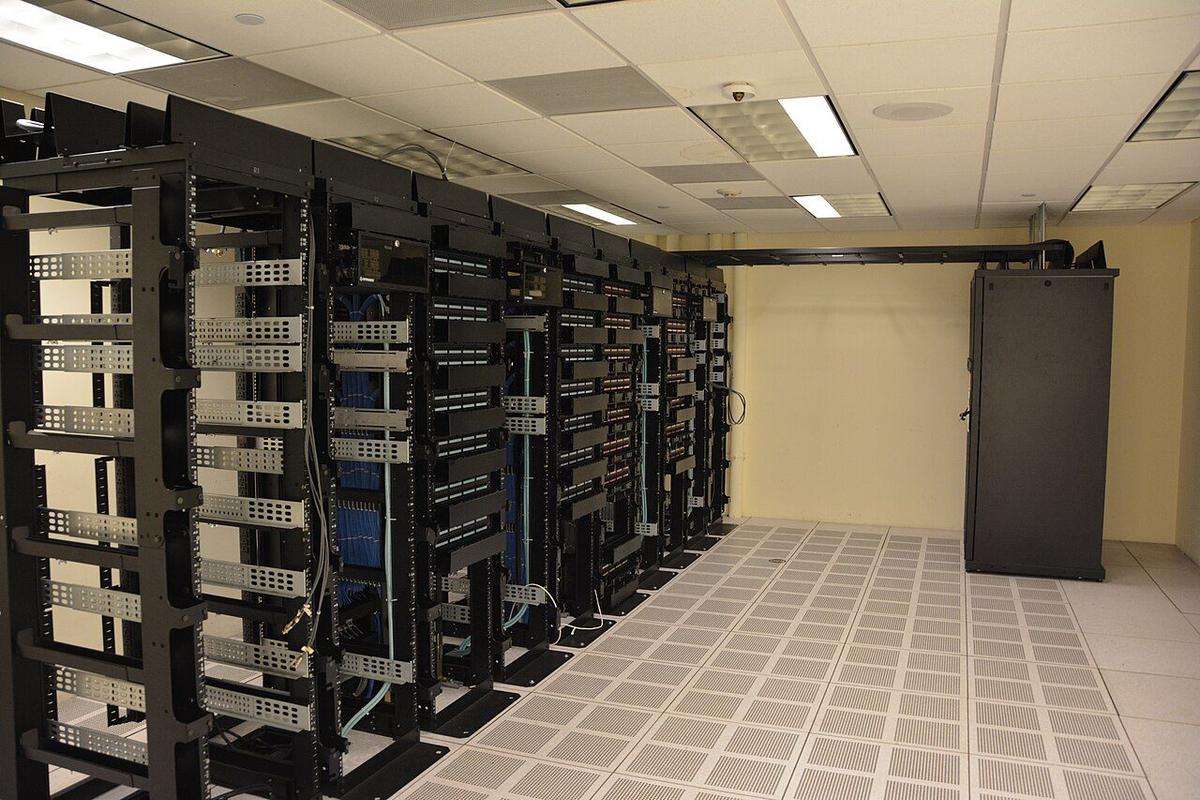
Photo: Carl Lender / Wikimedia Commons, CC BY 2.0
Microsoft's plan to run its Maia AI chips at "multi-gigawatt" scale from 2027 implies a fleet in the hundreds of thousands. Using the 96-accelerator, 167-kilowatt Maia 300 rack the company described on Monday, October 12, each gigawatt of rack power would hold about 5,988 racks and roughly 575,000 accelerators, by TradeFlock's estimate. Two gigawatts, the low end of "multi," would mean about 1.15 million chips. None of the five outlets TradeFlock reviewed ran that math, and Microsoft gave no chip count.
What Microsoft Announced About Maia 300
In a post on the Official Microsoft Blog, Scott Guthrie, executive vice president of Cloud + AI, wrote: "We will scale our Azure Maia family to multi-gigawatt deployments starting in 2027, making Maia the primary inference system for Microsoft products and services."
The post said Maia 200 is now in production, serving workloads including Microsoft Copilot, with GitHub Copilot and Microsoft Foundry "to follow by end of year." Maia 300, the third generation, "will begin production deployments in 2027."
Microsoft listed the key specifications. Each Maia 300 uses eight HBM4 stacks that "provide 18.0 TB/s of peak memory bandwidth within a 950-watt TDP." Its compute chiplets "are built on TSMC's N2P process node." A full rack brings "96 accelerators within a 167-kilowatt power envelope, delivering 27.6 TB of HBM capacity and 1.7 PB/s of aggregate HBM bandwidth."
How the Multi-Gigawatt Math Works
Dividing one gigawatt by 167 kilowatts gives about 5,988 racks. At 96 accelerators each, that is about 574,850 chips per gigawatt, by TradeFlock's estimate.
The estimate has limits. It counts only the power Microsoft quoted for the rack. A real data center also spends power on cooling, networking outside the rack and other building loads, so a gigawatt of total site power would hold fewer chips. Microsoft did not say whether "multi-gigawatt" refers to rack power or total facility power, or how the total splits between Maia 200 and Maia 300.
The rack figures also show where the power goes. Ninety-six chips at 950 watts each draw 91.2 kilowatts, about 55% of the 167-kilowatt rack, by TradeFlock's calculation. The rest covers memory controllers, networking, host systems and other rack hardware that Microsoft did not break out.
Maia 300 Versus Maia 200 on Memory
Microsoft's January 26 post introducing Maia 200 described that chip as having "216GB HBM3e at 7 TB/s" within "a 750W SoC TDP envelope," built on TSMC's 3-nanometer process.
Set side by side, Maia 300 raises peak memory bandwidth about 2.6 times while its power rating rises about 27%, by TradeFlock's calculation. That works out to about 18.9 gigabytes per second of bandwidth per watt, against about 9.3 for Maia 200, roughly double.
Capacity grows more slowly. The rack's 27.6 TB of HBM spread across 96 chips is about 287.5 GB per accelerator, by TradeFlock's calculation, about 33% more than Maia 200's 216GB. Microsoft did not state a per-chip capacity for Maia 300, so this figure is derived from the rack total.
The emphasis on bandwidth matches Microsoft's own pitch. The company wrote: "Moving data efficiently, rather than raw compute power, is increasingly the bottleneck in large inference systems."
The Claims Investors Cannot Yet Check
Several of Microsoft's headline numbers are company claims without published test details. Microsoft said it expects Maia 300 "to deliver 40% more tokens per megawatt compared to leading GPU-based systems." It did not name the GPU system or the model used for the comparison.
It also said that "in a full 96-accelerator configuration, it delivers up to 7x the rack-scale token throughput of Maia 200." For Maia 200, it claimed "up to 1.7x more tokens per watt" in Teams, Copilot and Cowork features "compared with leading GPU infrastructure." Neither figure has been independently verified.
Microsoft said Maia 300 architectural details are in a technical paper, and that it will share more at Microsoft Ignite 2026 in San Francisco next month.
What This Means for GPU Suppliers and Power Demand
If Maia becomes "the primary inference system for Microsoft products and services," as Guthrie wrote, a fleet in the range TradeFlock estimates would shift a large block of Microsoft's inference work away from merchant GPUs. That fits a wider move by cloud companies toward custom silicon, which TradeFlock tracked in the Broadcom custom ASIC backlog.
It also ties Microsoft's chip plan to its power plan. Each gigawatt of Maia racks needs a gigawatt of supply before cooling overhead, which is why TradeFlock has described Microsoft's AI spending as a power-purchase story.
The open questions are the ones the post left unanswered: how many chips Microsoft will order, which foundry capacity it has secured for N2P, and whether "multi-gigawatt" means two gigawatts or far more.
Cover photo: Carl Lender / Wikimedia Commons, CC BY 2.0
James Whitaker
Technology Editor
Reports on semiconductors, cloud infrastructure, and the industrial politics of AI.