Fed Rate Hike Odds: Traders Shift the Next Hike to December
Prediction market and futures prices on Oct. 22 show traders expect the Fed to hold on Oct. 28 and hike in December, after a week when inflation data and the chairman's silence moved the timing.
Senior Markets Correspondent
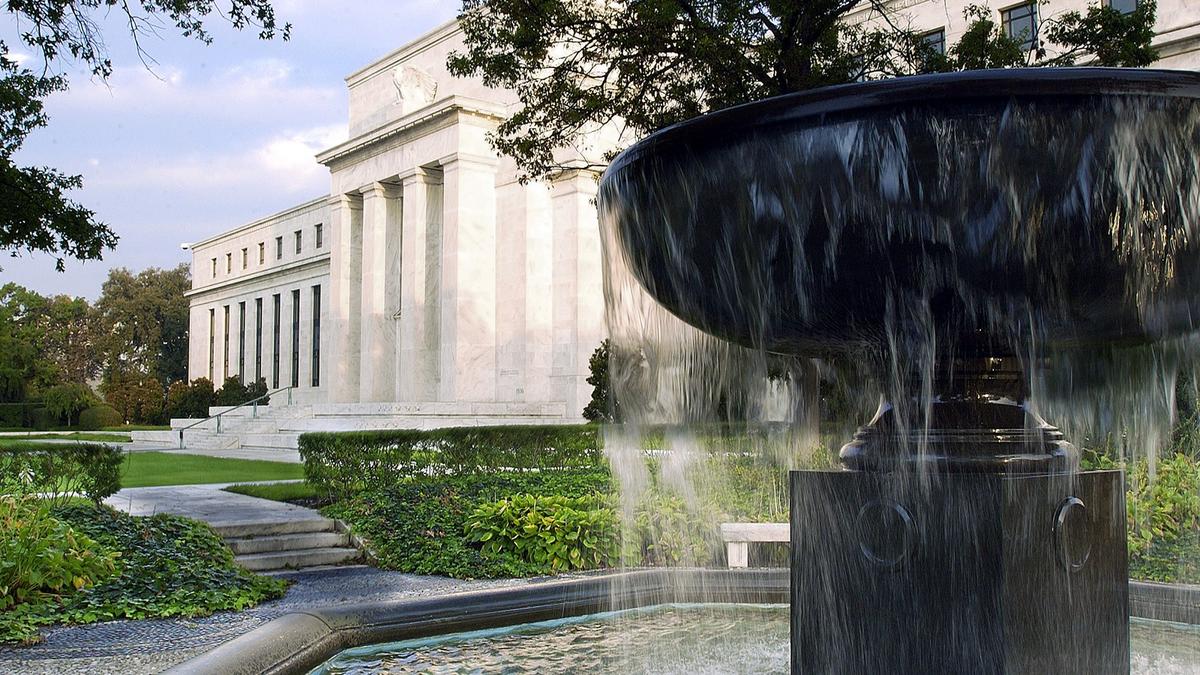
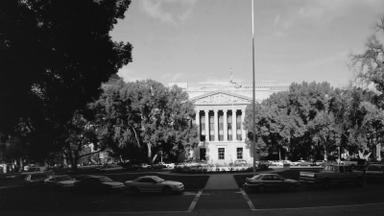
A dark stone fountain in front of the marble Eccles Building, home of the Federal Reserve Board in Washington. Photo: Federal Reserve, public domain, via Wikimedia Commons
Fed rate hike odds for October have all but disappeared, and traders still have the next hike penciled in for December. As of 1:40 p.m. ET on Thursday, Oct. 22, Polymarket priced a quarter point hike at the Federal Reserve's Oct. 27 and 28 meeting at 5.5%, with no change at 93.5%, while its December hike contract stood at 68%. That is the end point of a round trip that began Wednesday, Oct. 14, when the October hike contract jumped from 18.5% to 48.5% in the hour after the consumer price report, then sank to 13.5% after Fed Chairman Kevin Warsh declined to preview the decision. Traders did not drop the idea of another hike this year. They moved it to the next meeting, though with somewhat less conviction than a week ago.
How the October Odds Moved Hour by Hour
The figures come from hourly snapshots of the public price history for Polymarket's Fed decision in October market, which had drawn about $56.8 million in trading volume as of Oct. 22. A contract price of 48.5 cents equals an implied 48.5% probability. Prediction markets are not forecasts by the Fed and can move on thin trading, so the levels are best read as a gauge of sentiment.
On Friday, Oct. 9, the October hike contract traded at 15.5%. It drifted up to 18.5% by the morning of Wednesday, Oct. 14. Then the Bureau of Labor Statistics consumer price index for September showed prices up 0.6% for the month and 3.7% over the year, with gasoline up 9.1%. In the snapshot taken after the 8:30 a.m. ET release, the hike contract stood at 48.5% and the no change contract had fallen to 51.5%, close to an even split.
The spike faded within hours. Core consumer prices rose a moderate 0.3% for a second month, and by Wednesday evening the hike contract was back near 30%. The producer price report on Thursday, Oct. 15, which showed wholesale prices up 1.3%, barely registered: the contract read 27.5% before the release and 28.5% after it.
Warsh's No Comment Did the Most Work
The biggest single drop came late Thursday, Oct. 15, Washington time. Speaking at the International Monetary Fund and World Bank annual meetings, Warsh said the Fed had "removed a dose of accommodation" with its September hike and would deliver price stability, but he would not say what the committee might do next, according to Reuters. "I don't prejudge meetings," he said.
Polymarket's October hike contract fell from 27.5% to 16.5% between hourly snapshots around those remarks and settled at 13.5% before dawn Friday, Oct. 16, in New York. By Oct. 22 it was 5.5%. CNBC reported that fed funds futures put the chance of an October hike at 15% on Friday morning, close to the prediction market.
By TradeFlock's reading of the hourly data, the chairman's refusal to give guidance cut the October odds by more than the hot producer price report raised them. Reuters reported that most other Fed officials had said in recent weeks that more tightening was probably needed but that they wanted more data first, which gave traders a reason to read the chairman's silence as a hold.
December Is Where the Hike Is Priced
The Fed decision in December market told a steadier story. Its quarter point hike contract was 75.5% on the morning of Oct. 14, rose to 78.5% after the consumer price report, peaked near 79.5% and stood at 76.5% on Saturday, Oct. 17. By 1:40 p.m. ET on Oct. 22 it had eased to 68%, with no change at 28%. A separate Polymarket contract on whether the Fed raises rates again in 2026 rose from 80.5% to 87% after the CPI, was 77.5% on Oct. 17 and 74% on Oct. 22.
Futures tell a similar story. A fed funds futures recalculation using CME's method, published by MarketDrip at 1:30 p.m. ET on Oct. 22, showed an October hold at 92% and a December hike at about 70%.
Put together, the October and December prices suggest traders see one more hike this year as likely and see the timing, not the direction, as the open question. That is a TradeFlock interpretation of two separate markets, and an October hike would change the December math.
The Fed delivered an expected rate hike in September, its first in more than three years. TradeFlock reported that on Sept. 10, ahead of the September meeting, fed funds futures priced a 70% chance of a hike. TradeFlock also reported on how Warsh faced a tough vote count.
The Fed Stays Quiet Until the Meeting
Under the Federal Open Market Committee's policy on external communications, officials stop public comment on monetary policy at 12:00 a.m. ET on the second Saturday before a meeting. For the Oct. 27 and 28 meeting, listed on the FOMC calendar, that blackout began Saturday, Oct. 17, and runs through the end of Thursday, Oct. 29.
That leaves data and markets to move the odds until the decision at 2:00 p.m. ET on Wednesday, Oct. 28. For businesses timing borrowing or pricing decisions, the practical takeaway is that traders expect the Fed to hold in October and act in December, and that a single data surprise moved that view by 30 points in an hour on Oct. 14.
Cover photo: fountain outside the Marriner S. Eccles Federal Reserve Board Building in Washington, Federal Reserve, public domain, via Wikimedia Commons (cropped).
Elena Vasquez
Senior Markets Correspondent
Covers Treasuries, the dollar, and the policy signals that reprice risk assets.