Penske Automotive Take Private Needs Only $4B in New Money
Penske Corporation and Mitsui already own 72.6% of Penske Automotive, so buying the other shares at $212 costs about $3.8 billion, and the price is below where the stock closed after their first bid.
Wall Street Correspondent

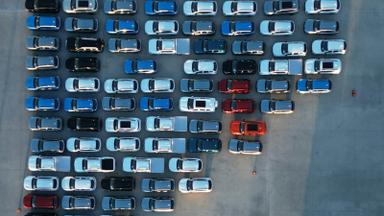
Aerial view of rows of new cars parked in a lot. Photo: Tom Fisk on Pexels
Penske Automotive Group's $16.3 billion take-private needs only about $4 billion of new money, because Penske Corporation and Mitsui already own 72.6% of the company and are keeping those shares. The 8-K says the buyer expects "up to $2.2 billion" of equity from the two owners and debt "of up to $1.8 billion." By TradeFlock calculation, the roughly 18 million shares held by everyone else cost about $3.8 billion at $212.
What Penske and Mitsui Agreed to Pay for PAG
Penske Automotive signed the merger agreement on Thursday, October 15, 2026. Holders other than Penske, Mitsui and the other members of the investor group receive $212.00 a share in cash, which the company's release values at an enterprise value of about $16.3 billion. The release says the deal is expected to close in the first quarter of 2027 and has no financing condition. The agreement's outside date is Friday, October 15, 2027.
After closing, Penske is to hold about 64% of the company and Mitsui about 36%, the 8-K says. Today's 13D filings show Penske Corporation at 34,333,500 shares, or 52.3%, and Mitsui at 13,322,205 shares, or 20.3%.
Why the Cash Needed Is Far Below the Headline
The investor group's shares are "Excluded Shares" in the agreement. They stay outstanding instead of being converted into cash. PAG reported 65,662,873 shares outstanding on its latest 10-Q cover, as of July 16. Subtracting the 47,655,705 shares held by Penske and Mitsui leaves about 18.0 million shares, or 27.4%, that must be bought. At $212 that comes to about $3.82 billion, all TradeFlock calculations.
| Measure | Figure |
|---|---|
| Enterprise value (release) | about $16.3 billion |
| All shares at $212 (TradeFlock calculation) | about $13.9 billion |
| Shares held by outside holders (TradeFlock calculation) | about 18.0 million |
| Cost of outside shares at $212 (TradeFlock calculation) | about $3.8 billion |
| Committed equity plus debt (8-K) | up to $4.0 billion |
The $4.0 billion of equity and debt is the sum of the two figures in the 8-K. That leaves roughly $0.2 billion of room for fees and for equity awards, which the agreement cashes out. The debt side is flexible: the 8-K says the bank commitment can be reduced by up to $1.8 billion of new senior subordinated notes or up to $1.1 billion of added borrowing under PAG's existing U.S. credit agreement. The banks named are JPMorgan, Bank of America and Wells Fargo. Lender terms can matter in these deals, as TradeFlock reported when KKR delayed a software take-private, but PAG's filing describes committed financing.
The Price Sits Below Where PAG Traded After the Bid
The investors first offered $210 on Wednesday, July 22, in a Schedule 13D amendment. The final price is $2 higher, a 1.0% increase after almost three months. The release calls $212 a premium of about 8.6% to the July 21 close, the last day before the proposal, and 8.84% to Wednesday's close.
Yahoo Finance closing prices show PAG at $195.19 on July 21 and $214.57 on July 22, a one day jump of 9.9%. The stock peaked at $223.44 on July 29. At $212, the offer is 1.2% below the July 22 close and 5.1% below that peak, TradeFlock calculates. PAG closed at $194.79 on October 14, so anyone who bought near that peak is being offered less than they paid.
Special committee chair David Hoogendoorn said the deal "provided the greatest value for the Company's minority shareholders." The committee had an opinion from Moelis that the price is fair to holders other than the investor group.
Two Votes, and Only One Is Uncertain
Closing needs a majority of all outstanding shares and also "a majority of the votes cast by the 'disinterested stockholders' (as defined in Section 144 of the DGCL)." The investor group signed support agreements covering its 72.6%, which should carry the first vote. The second counts only unaffiliated holders, so the roughly 18 million outside shares decide it.
Fees are lopsided in the buyer's disfavor. The company owes $383.0 million in some cases, including a superior proposal, and the buyer owes a $488.0 million reverse fee if it fails to close. Measured against the roughly $3.8 billion of outside equity, a TradeFlock calculation, those are 10.0% and 12.8%. A rival bid looks unlikely when the buyer holds 72.6% and said in its July proposal that its members are not interested in selling.
The first financial look at the company since the deal comes on Wednesday, October 28, when PAG reports third quarter results without a conference call. Another take-private signed the same day, CCC Intelligent Solutions, is a sale to outside investors, not to insiders, and TradeFlock covered its path to a deal.
Cover photo: Aerial view of rows of new cars in a lot, by Tom Fisk on Pexels, used under the Pexels License.
Sophia Brennan
Wall Street Correspondent
Covers IPOs, buybacks, and the capital-markets calendar out of New York.