When History Repeats Itself With a Mean and Ugly Face
Explore the “Donroe Doctrine,” the Venezuela crisis, U.S. intervention, and how Donald Trump’s approach echoes and reshapes the Monroe Doctrine.
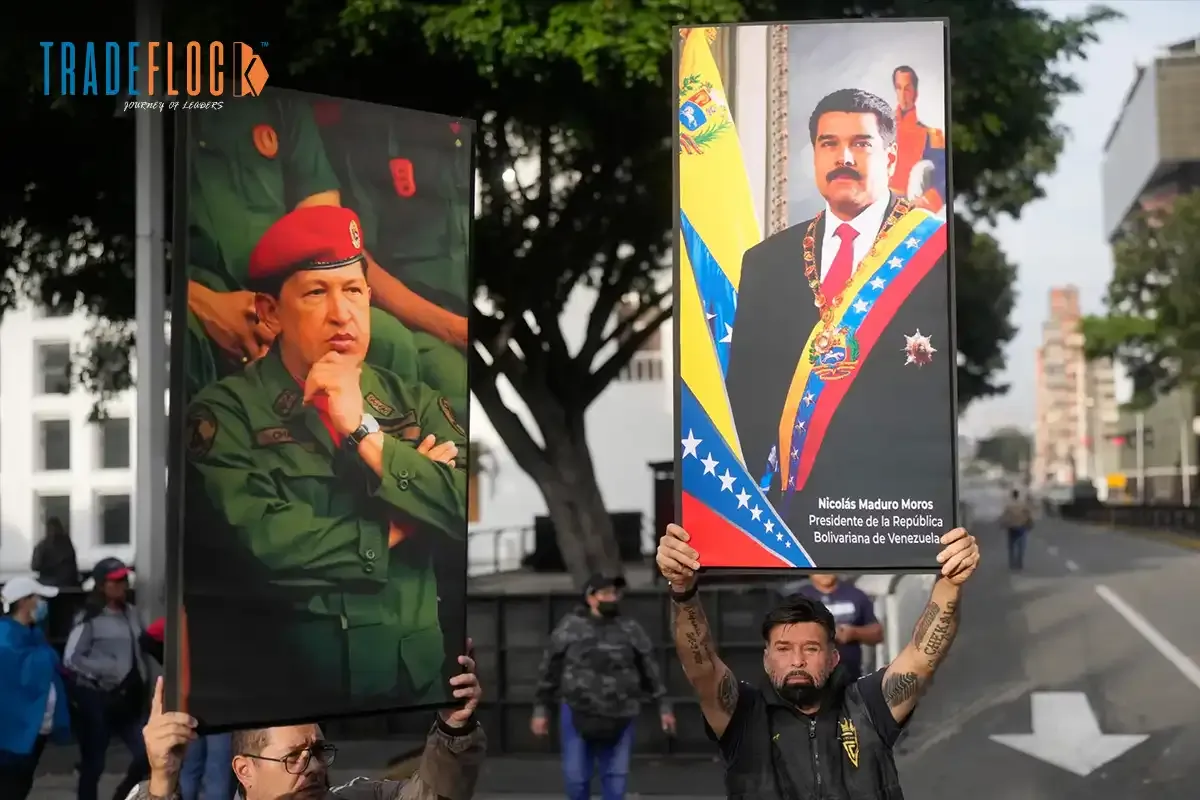
Every once in a while, something happens in geopolitics that urges or forces the world to stop and ask: is history repeating itself? In January 2026, the world witnessed exactly this when the United States of America conducted a military operation in Venezuela that resulted in the capture of Venezuelan President Nicolas Maduro, a leader who had become a symbol against the US pressure in the Americas.
This wasn’t just another routine operation conducted by the US. On the contrary, this was a reiteration of the dominance the USA once held over the Western Hemisphere, particularly the Americas. However, what makes this moment even more striking is the doctrine driving it, a doctrine many are calling the “Donroe Doctrine”, including the POTUS Donald Trump. Strikingly similar to the 19th-century doctrine called the Monroe Doctrine, the Donroe Doctrine is inherently different in how it sees the world.
The Ghost of Monroe, Reimagined
Tossed by James Monroe in 1823, the original Monroe Doctrine was simple: keep the old colonial powers at bay and declare the Americas a zone free from European intervention. For nearly 2 centuries, this doctrine has shaped the politics in the Western Hemisphere, particularly in the Americas, sometimes quietly, in the shadows, sometimes aggressively.
The doctrine, at its core, was a means to prevent the European powers from causing chaos in the Americas through their colonial enterprises, either by freeing or halting the expansion of the old imperial powers. Later in 1904, the then-president of the United States, Roosevelt, issued the Roosevelt Corollary, which justified the direct intervention of the US in the sovereign affairs of the states in the Americas, primarily to maintain order.
However, Donald Trump took this to a new level altogether. Claiming that the doctrine is the only way to stop the growing influence of China, Russia, Iran, and other perceived threats. The “Donroe Doctrine” goes beyond the original Monroe Doctrine by advocating military and political intervention, not just opposition to European colonialism. Critics see this approach as a justification for unilateral U.S. force and interference in the affairs of sovereign nations.
Operation Absolute Resolve: The Rubicon Moment
The Monroe Doctrine, proposed in 1823 and reimagined in 1904, doesn’t necessarily apply in the world, or even in the Western Hemisphere, anymore. This is simply because the UN grants special rights to every sovereign country on the planet. However, the US put all of this down the gutter on 3 January 2026.
What unfolded was not a distant drone strike or a sanctions announcement; it was the capture of a sitting president, Maduro, and his wife, Cilia Flores, who were flown to New York to face charges of narco-terrorism and cocaine trafficking. For many observers, this was a moment that forever blurred the lines between law enforcement and geopolitical intervention. Never before in modern Western Hemisphere history had a foreign power seized a leader with such immediacy and spectacle. The world watched with astonishment, and many in Latin America watched with unease.
Pride and Prejudice: US’s Justification and Global Reaction
This was a bold decision even for a country of the United States’s stature. Various states around the world reacted with mixed reactions to this development. Critics called it an overreach, something more akin to occupation than assistance or interference. In capitals from Brasília to Mexico City, leaders issued statements warning that such action threatens sovereignty and sets a perilous precedent for unilateral intervention. Moreover, several countries pointed out that the reason for the US ‘occupation’ is their intention to extract sanctioned Venezuelan oil. Venezuela sits atop the world’s largest proven oil reserves, a treasure that has been both a blessing and a burden. In the aftermath of the intervention, the United States asserted control over Venezuelan oil exports and mandated fair market prices for overseas sales, cutting off unofficial networks that had long funneled wealth away from the state.
On the contrary, the US called it a righteous pursuit of justice against the alleged narco terrorism and a firm stand against external powers like China and Russia extending their influence close to U.S. shores. Supporters heralded it as decisive leadership in a failing neighborhood.
The Human Cost: Venezuelans in the Crossfire
Behind the geopolitics are real people whose lives have been shaped by one crisis after another. For millions of Venezuelans, years of economic collapse, shortages, and mass migration have already tested their resilience. Now, with foreign troops having entered their country and political uncertainty in the air, ordinary citizens find themselves wondering what freedom, or freedom from fear, even means anymore. The streets of Caracas echo with both hope and dread; some see the U.S. action as a chance for a fresh start, while others see it as another form of tyranny that couldn’t care less about the citizens of the country. This emotional tension is rarely captured in policy briefs, yet it is palpable in families whose futures hang in the balance.
Share this article Latest News Categories More News