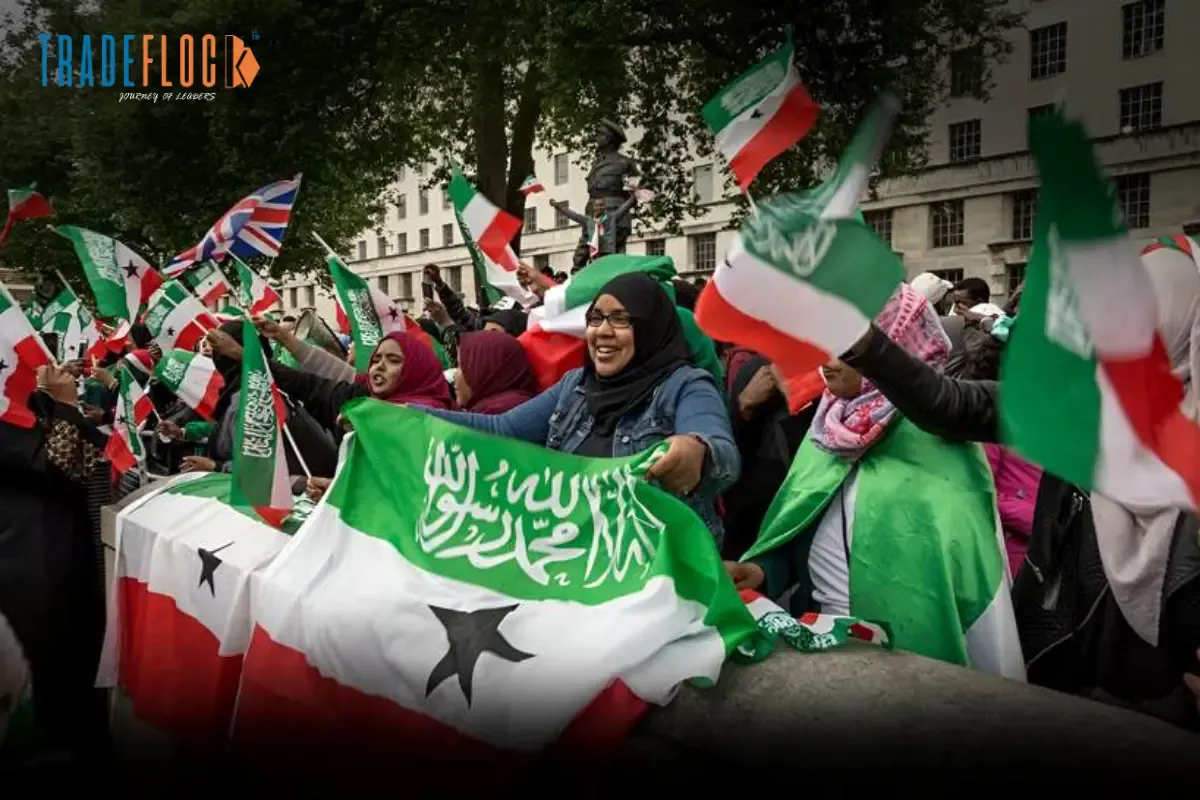
For more than thirty years, Somaliland has functioned as a country, while the rest of the world has treated it as an administrative error. On paper, it barely existed. On the ground, it voted, taxed, policed, argued, reconciled, and moved on. The contradiction lived quietly for so long that many people stopped noticing it, much like a clock that keeps ticking in a room where everyone insists time has frozen.
Somaliland never waited for permission. It did not write op-eds demanding recognition or stage diplomatic performances meant to shame the international community. It did something more stubborn and less dramatic. It is governed. Roads were repaired because they were broken, not because a donor was watching. Disputes were settled not because they lingered, but because a foreign mission demanded calm. Institutions accumulated memory, which meant they also accumulated mistakes, the way real institutions always do. Over time, that ordinariness became its most unusual feature.
What has changed recently is not Somaliland’s conduct, but the usefulness of pretending it does not exist.
When Reality Becomes Awkward for Policy
For years, ignoring Somaliland carried no obvious cost. It did not collapse. It did not export chaos. It did not demand intervention. The international system is comfortable with places that either fail loudly or submit quietly. Somaliland did neither. It simply continued, like a train running on a track the map refused to acknowledge.
Gradually, the gap between description and reality became harder to manage. Traders adjusted documents to match practice rather than policy. Security analysts learned to speak carefully in public and plainly in private. Aid organizations realized that instructions written elsewhere often made little sense on the ground. None of this forced a decision, but it created friction, and friction has a way of drawing attention.
At some point, a place that works without recognition starts to embarrass the logic that excludes it.
Why Israel Is Looking Without Sentiment
Israel did not arrive at Somaliland through emotion or ideology. It arrived the way sailors read coastlines, by noting depth, access, and shelter. The Red Sea and the Gulf of Aden have become crowded corridors where trade routes, security concerns, and technological infrastructure overlap every day. Stability there is no longer an abstract good. It is a practical requirement.
From that vantage point, Somaliland appears less like a diplomatic puzzle and more like an available anchor. It controls its coastline. It manages its territory. It offers predictability in a region where unpredictability has become expensive. Israel’s interest reflects a wider shift taking place quietly across global politics, where states are beginning to ask a simple question before all others. Can this place be relied upon?
This is not defiance. It is impatience with delay.
“The longer the world delays recognition, the more it trains itself to operate outside its own rules, and that habit will reshape diplomacy far beyond the Horn of Africa.”
America’s Silence and Its Weight
The United States watches Somaliland with greater caution, and that caution is shaped by memory. Recognition, once granted, travels far beyond the immediate case. It invites comparisons, demands consistency, and unsettles arrangements that have been kept intact largely through habit.
Yet silence also speaks. While Washington weighs implications, others learn the terrain. Influence rarely collapses in a single moment. It thins, shifts, and reappears in unexpected places. By the time it is noticed, it often looks less like a loss and more like an adjustment that happened without permission.
The American dilemma is not moral. It is temporary. How long can reality be deferred before it starts writing policy on its own?
What Recognition Would Actually Do
If Somaliland were recognized, daily life would look much the same. Markets would open. Schools would run. Streets would remain familiar. The changes would happen in places most people never see. Contracts would stop carrying asterisks. Insurance rates would change their calculations. Infrastructure projects would move without legal gymnastics.
Money would move first, as it usually does, followed by logistics and data. Ports would expand with a clearer purpose. Trade routes would become routine rather than provisional. Regional relationships would adjust. Ethiopia would negotiate access to the sea with fewer ambiguities. Gulf states would deepen engagement carefully. European policymakers would revise assumptions quietly. China would assess the opportunity without commentary.
The most profound shift would be psychological. Somaliland would no longer be spoken about as an exception that needs explanation. It would simply be part of the landscape.
The Uneasy Thought Beneath the Surface
What makes Somaliland uncomfortable for many governments is not its claim, but its implication. It suggests that statehood might be connected, once again, to performance. That borders drawn long ago do not automatically guarantee relevance. That continuity, however uncelebrated, might count for something.
For countries held together by fragile compromises, this is a difficult thought. It is easier to maintain old language than to admit that some places have quietly outgrown it.
Where This Is Likely Headed
The future will not announce itself with a vote or a declaration. It will unfold through routine decisions. Security cooperation will deepen before embassies appear. Trade will normalize before flags are raised. Some states will move early and say little. Others will arrive later with explanations prepared.
Somaliland has time. It has already lived for decades without acknowledgement. The greater test lies with the international system, which must decide whether it can adapt to a place that proved, patiently and without spectacle, that existence does not always require approval.
Share this article
Latest News
Categories
More News