29 December, 1845: Texas Born From Diplomacy, Conflict, and Expansion
The United States of America, the world’s most powerful country and home to the largest companies, has a rich history dating back to the last ice age. In every country, there is one state that embodies the country's spirit in all honesty.
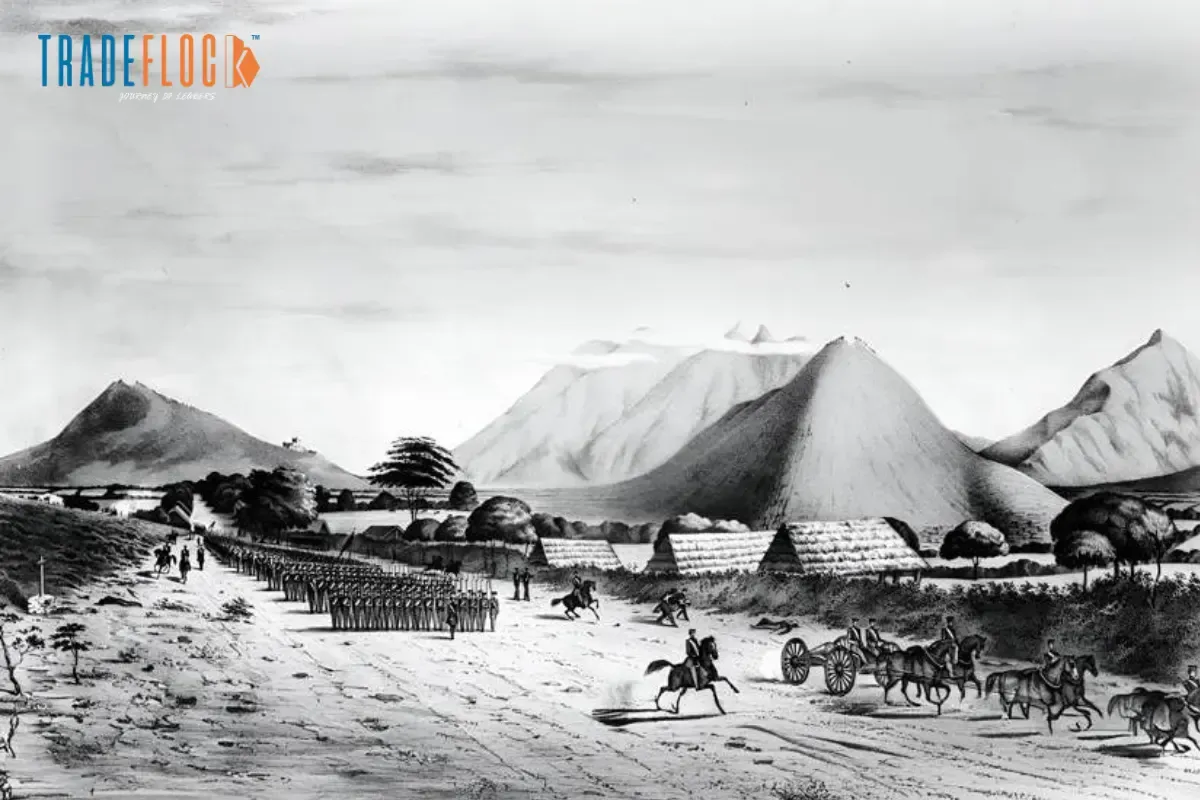
The United States of America, the world’s most powerful country and home to the largest companies, has a rich history dating back to the last ice age. In every country, there is one state that embodies the country's spirit in all honesty. When it comes to the US, Texas is that state. On December 29, 1845, Texas officially entered the United States as the 28th state, marking one of the most consequential territorial expansions in American history. Unlike most states, Texas joined the Union not from a federal territory but as a former independent republic, a status it had held for nearly a decade. Its annexation reshaped U.S. politics, intensified sectional tensions over slavery, and directly contributed to the outbreak of the Mexican–American War.
From Mexican Province to an Independent Republic
To understand the story of Texas’s annexation, it is essential to learn about its history prior to the US. Before the notion of America existed, Texas was part of Spanish Mexico for 300 years, from 1519, and later of the Mexican Republic after Mexico's independence in 1821. In subsequent years, the Mexican Republic encouraged Americans to enter Texas and establish settlements, resulting in rapid growth in the Anglo-American population. By the 1830s, Texas already had a substantial number of Anglo-American people and tension rose over governance, language, religion and, most importantly, slavery, which Mexico had abolished in 1829.
These tensions culminated in the Texas Revolution (1835–1836). After key events such as the Battle of the Alamo and the Battle of San Jacinto, Texas declared independence from Mexico on March 2, 1836. Mexico never formally recognized this independence, a fact that would later complicate annexation efforts.
The Republic of Texas and Early Annexation Efforts
Following its independence from Mexico, Texas existed as the Republic of Texas, an independent entity. However, because a substantial number of Anglo-Americans lived there, they sought annexation by the United States almost immediately. Still, it didn’t go well as Washington was divisive. It might be a little hard to believe, but the main problem was slavery. Texas was a slave state, and its annexation meant that the balance between non-slavery and slavery states would become uneven.
In 1844, an annexation treaty negotiated by President John Tyler failed in the U.S. Senate, falling short of the required two-thirds majority. Opposition came from Northern lawmakers concerned about the expansion of slavery and from those wary of provoking war with Mexico.
The Joint Resolution and Political Turning Point
The political landscape shifted following the 1844 U.S. presidential election, in which James K. Polk, a strong proponent of territorial expansion and Manifest Destiny, defeated Henry Clay. Polk’s victory was widely interpreted as public support for annexation.
Instead of pursuing a treaty, Congress used a joint resolution, which required only a simple majority in both the House and Senate. On March 1, 1845, President John Tyler signed the joint resolution offering annexation to Texas. Texas voters approved the proposal in October 1845, and a state constitution was drafted shortly thereafter.
Official Admission as the 28th State of the US
On December 29, 1845, President James K. Polk signed the resolution admitting Texas into the Union as the 28th state. Texas retained unique provisions, including control over its public lands and the ability to divide into up to five states with congressional approval, a clause embedded in the annexation agreement.
At the time of admission, Texas had an estimated population of approximately 150,000 residents, including enslaved people, free Black residents, Native Americans, and settlers of Mexican and European descent.
The Immediate Consequences
Texas’s admission had immediate geopolitical consequences. Mexico viewed annexation as an act of aggression, as it still considered Texas a rebellious province. Border disputes, particularly over whether Texas extended to the Rio Grande or the Nueces River, escalated tensions.
In April 1846, just months after statehood, fighting broke out between U.S. and Mexican forces, leading to the Mexican–American War (1846–1848). The war resulted in the U.S. acquiring more than 500,000 square miles of territory, including present-day California, Arizona, New Mexico, Nevada, and Utah.
And Then They Lived Happy Ever After
Texas’ admission to the United States in 1845 was not a simple administrative act but the culmination of revolution, diplomacy, and ideological conflict. As the only state to enter the Union after existing as a sovereign republic, Texas reshaped American expansion, foreign policy, and internal politics. Its path to statehood stands as a defining episode in the broader story of U.S. territorial expansion and national identity.
Share this article Latest News Categories More News